NOVA principle.
Responsibility in network construction
The Grid Development Plan
Our basis for ensuring security of supply
The energy transition presents us with challenges. To ensure we can reliably supply consumers with large volumes of renewable electricity, we will adjust our transmission network to meet the demands. Every two years we will work with the three other German transmission system operators to build the necessary measures into the Grid Development Plan (German acronym: NEP).
The aim of the NEP is a grid with no power transmission bottlenecks, combined with the most space-saving grid expansion possible. All measures will be based on the NOVA principle of grid optimisation first, then grid strengthening before any further grid expansion. Any expansion may only be planned once all other options within the existing grid have been exhausted.
For further information you can visit our page about the Network development plan.
Interview: Three questions about grid development
- What particular demands make adjustment of the transmission network necessary?
- How will the Grid Development Plan be devised?
- Why is the NOVA principle being applied?
Dr. Michael Schäfer · Strategic Grid Planning “The aim of grid planning is sparing use of resources.”
English transcription

Baden-Württemberg ×
Scenario A describes a moderate-paced energy transition involving some introduction of new technologies with a relatively minor degree of innovation. There will be a modest increase in onshore wind farms and photovoltaics, with a slight decline in conventional power capacity.
- Renewables TWh
- Electricity consumption TWh
- Conventional generation TWh
In Scenario B the development of the energy sector will be achieved by innovative technologies like renewable energy generators (e.g. wind turbines and photovoltaics), home storage, heat pumps, electric mobility and enhanced efficiency. European-wide climate change policies will play a key role.
- Renewables TWh
- Electricity consumption TWh
- Conventional generation TWh
Scenario C describes an accelerated energy transition process with intensive use of flexibilities, new technologies and networking of the electricity, heating and transport (e-mobility) sectors in support of cross-sector climate change goals.
- Renewables TWh
- Electricity consumption TWh
- Conventional generation TWh
What does the NOVA principle mean?
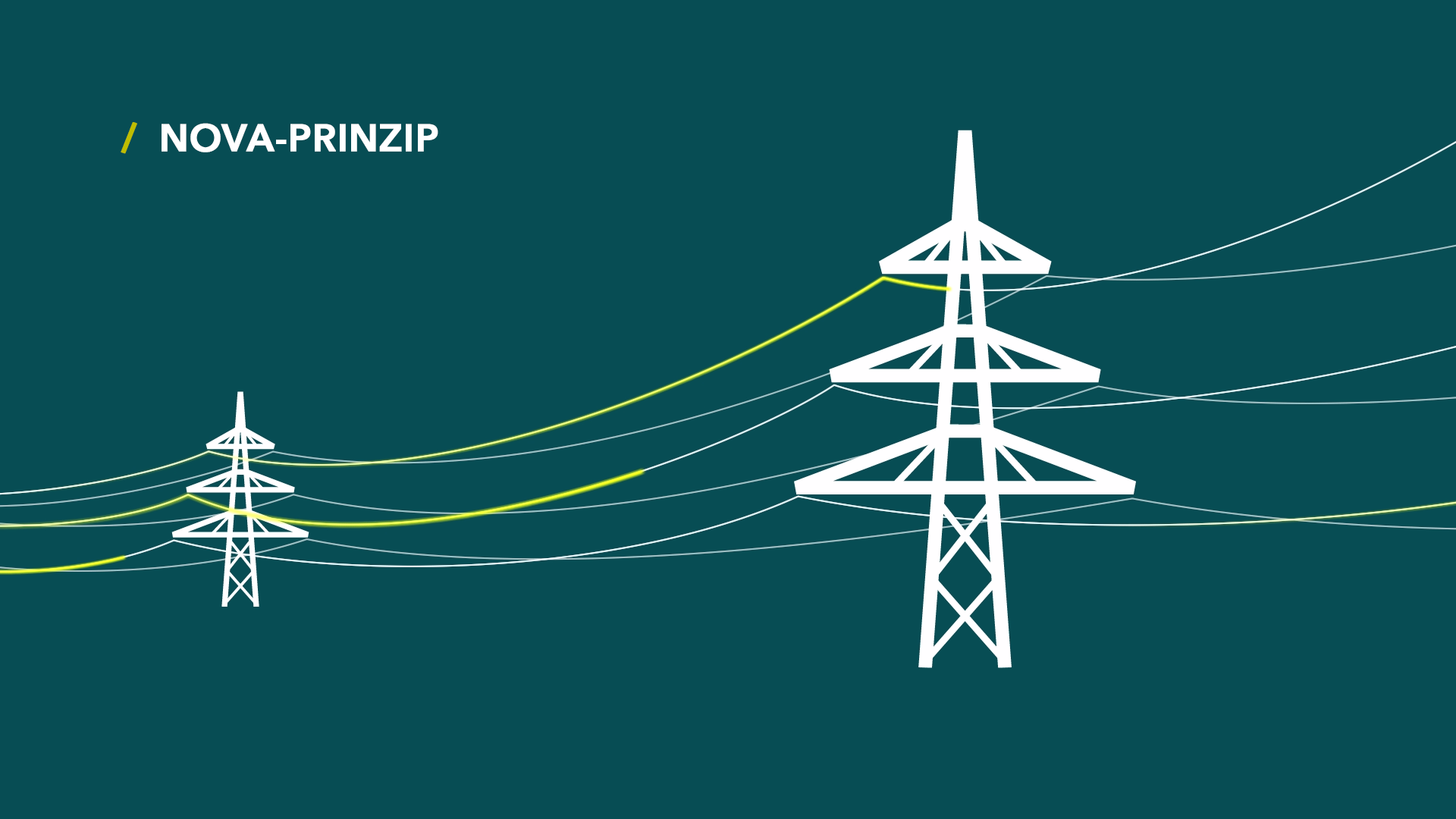
N O V A
Grid optimisation
All weathers.
Meteorology and grid operation
Scientific studies and technical innovations help us optimise grid usage. For instance, we draw on meteorological expertise to alter the way we use weather-dependent overhead lines.
The current capacity of overhead lines for specific conditions like “high summer weather” is standardised, with an assumed ambient temperature of 35° Celsius and a wind speed of 0.6 metres per second. A cooler temperatures or stronger wind will increase the current capacity beyond the standard level, so in future we will be installing our own weather stations to ensure better use of the grid in all weathers.
Interview: in conversation about the way weather-dependent overhead lines are used
Wolfgang Tausend · Grid Construction
“Accurate weather data enables more flexible control of the grid.”

Weather stations on the mast
Weather stations installed on the mast supply up-to-the-minute data to the central switch station.
Weather stations on the mast
Weather stations installed on the mast supply up-to-the-minute data to the central switch station.
Without taking into account the effect of weather on current capacity, that sample overhead line can transmit power with a maximum strength of 2580 amperes (A), which corresponds to a capacity of 1877 megawatts (MW).
Favourable weather, such as cooler temperatures or a stronger wind increase the maximum current capacity of the sample power line by up to 1.4 times (3600 A/2600 MW). The central switch station team can leverage this effect with the help of up-to-the-minute weather data – for more flexible control and better use of the grid.



NOVA principle
Our sense of responsibility towards people, nature and the environment
With its transmission network, TransnetBW preserves the quality of life and economic strength of Baden-Württemberg, the south-west of Germany and beyond our own borders. Needs-based adjustment of the grids is fundamental to the success of the energy transition. By applying the NOVA principle, we can minimise the impact on people and the environment. And in supplying the energy we need in the future, we will continue to honour our sense of corporate responsibility towards people and the environment.
Dr. Werner Götz · Chief Executive Officer “NOVA to us means making our grid fit for the energy transition – and protecting people and the natural world as much as possible in the process.”
English transcription